

 Back
Back

















Tracking Trailers and Unpowered Assets: Battery Life, Reporting Cadence, and What to Expect
Oct 12, 2026Battery powered GPS trackers are the only option for trailers, containers, generators, and equipment that have no onboard power to feed a hardwired device, and the trade off for that independence is a reporting cadence that slows down to keep the battery alive.
Definition: A battery powered GPS tracker is a self contained tracking device with its own internal power source, designed for assets that have no vehicle electrical system to draw from. The device calculates its position using GPS satellites, stores the data, and transmits it over the cellular network at intervals that are configured to balance location visibility against battery life. The battery is either rechargeable or replaceable, depending on the device.
Key Takeaways
- Battery powered trackers are the only option for unpowered assets like dry van trailers, flatbed trailers, shipping containers, portable generators, construction equipment without running engines, and any other asset that sits without an electrical system to tap into.
- Battery life depends almost entirely on the reporting interval, and the range is wide. A tracker configured to report once per day can last 12 to 18 months on a single charge. The same tracker configured to report every 5 minutes may last only a few weeks. [2] The fleet sets the interval based on how urgently it needs to know where the asset is at any given moment.
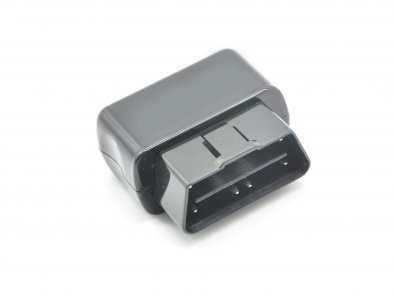
- A battery tracker does not read engine data. There is no OBD port or CAN bus on a trailer. The data a battery tracker provides is limited to GPS position, timestamps, speed when moving, geofence entry and exit, and motion detection alerts. It does not provide fuel level, engine hours, diagnostic trouble codes, or driver behaviour events. Those data points require a powered telematics device connected to the vehicle’s diagnostic port.
- Cold weather reduces battery capacity. Temperatures below 0 degrees Celsius can reduce the effective capacity of lithium and lithium polymer batteries by around 20 percent. [3] A tracker rated for 12 months of battery life in mild conditions may last 8 to 9 months through a winter in a cold climate.
- Motion detection is the feature that makes battery trackers operationally useful for security. The device sits in a low power sleep mode when the asset is stationary, consuming almost no battery. When the accelerometer detects movement, the tracker wakes up and pushes a GPS position to the platform within seconds. This means the fleet knows within seconds when a parked trailer starts moving, without the battery cost of continuous reporting.
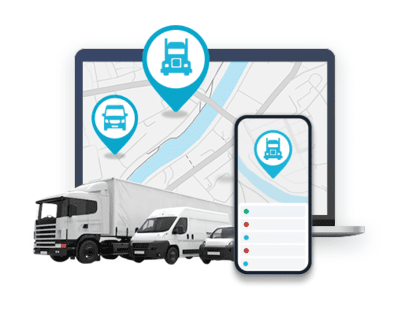
A haulage operator runs 45 trucks and 60 trailers. The trucks have hardwired telematics devices reporting every 10 seconds. The trailers have nothing. When a trailer is attached to a truck, the fleet knows where it is because the truck’s tracker is reporting. When the trailer is detached and parked at a customer’s yard or a storage lot, it goes dark. The fleet does not know where 60 trailers are at any given moment unless someone calls the driver or the customer. A battery powered tracker on each trailer provides a position report once or twice a day when the trailer is parked and a motion alert within seconds when it starts moving unexpectedly.
This guide covers what a battery tracker does and does not provide, how reporting interval affects battery life, the mounting options, motion detection and security alerts, solar and rechargeable alternatives, and the limitations that a fleet should understand before deploying battery trackers at scale.
What a battery tracker provides and what it does not
The data a battery tracker generates is a subset of what a powered telematics device on a vehicle provides. Understanding the boundary is important because a fleet that expects engine data from a trailer tracker will be disappointed.
What a battery tracker provides:
- GPS position. Latitude and longitude at each reporting interval, accurate to the same 2 to 5 metre range as any other GPS tracker under open sky.
- Timestamps. The time of each position report, each motion event, and each geofence crossing.
- Speed. Calculated from GPS data when the asset is moving.
- Geofence entry and exit. The same geofence functionality triggered when the tracker’s reported position crosses a boundary.
- Motion detection alerts. An accelerometer inside the device detects when the asset starts moving after being stationary and triggers an immediate alert.
- Battery level. The platform reports the remaining battery charge so the fleet knows when a device needs recharging or a battery replacement.
What a battery tracker does not provide:
- Engine data. No RPM, no coolant temperature, no fuel level, no diagnostic trouble codes. There is no engine to read from.
- Engine hours. A trailer does not have an engine, so there are no engine hours to track.
- Driver behaviour events. Harsh braking, acceleration, and cornering events require an accelerometer calibrated against vehicle speed and combined with engine data. A battery tracker on a trailer records motion but cannot attribute driving behaviour to a driver because the tracker is on the trailer, not on the vehicle pulling it.
- Odometer. No connection to a vehicle speed sensor or engine control module means no odometer data. Distance can be estimated from GPS points but is less precise than an odometer reading.
| Data type | Powered vehicle tracker | Battery trailer tracker |
|---|---|---|
| GPS position | Yes, every 5 to 30 seconds | Yes, at configured interval |
| Engine diagnostics (DTCs) | Yes | No |
| Fuel level | Yes | No |
| Engine hours | Yes | No |
| Driver behaviour scoring | Yes | No |
| Geofence alerts | Yes | Yes |
| Motion detection | Yes | Yes |
| Battery level | N/A (vehicle powered) | Yes |
How reporting interval affects battery life
The single most important configuration decision on a battery tracker is the reporting interval. It determines how often the fleet sees a position update, and it controls how many months the battery survives before it needs replacing.
Every reporting cycle starts the same way. The GPS receiver powers on and pulls 40 to 60 milliamps while it searches for satellites and locks a position. Then the cellular modem fires up at a peak of 200 to 500 milliamps, connects to the network, and pushes the data packet to the platform. [1] Both operations together last anywhere from 30 seconds to a couple of minutes depending on signal conditions, and every cycle eats the same slice of battery whether the data it sends is urgent or routine. The more frequently the tracker reports, the more slices it takes, and the faster the battery runs down.
Cellular signal strength also matters more than most fleets expect. When a trailer is parked at an urban depot with strong network coverage, the modem connects and transmits in seconds. When the same trailer sits in a rural yard or a basement parking structure with weak signal, the modem has to transmit at higher power and retry connections multiple times before the data goes through. That extended transmission window drains the battery faster per cycle, and over hundreds of cycles the difference adds up. A fleet that deploys battery trackers across a mix of urban and rural sites should expect shorter battery life on the assets parked in low coverage areas, even at the same reporting interval.
Typical battery life ranges by reporting interval:
- Once per day: 12 to 18 months on a standard lithium battery. [2] This is the setting for assets that are parked most of the time and where knowing the location once a day is sufficient.
- Every 4 to 6 hours: 6 to 9 months. Suitable for assets that move periodically and where the fleet wants to confirm the location several times per day.
- Every hour: 2 to 4 months. For assets that move regularly and where the fleet needs frequent updates during working hours.
- Every 5 to 10 minutes: 2 to 6 weeks. This approaches the reporting frequency of a powered vehicle tracker but burns through the battery quickly. Only practical for short term deployments or assets with regular recharging schedules.
- Every 30 to 60 seconds: Days. This level of reporting is not sustainable on battery power and is only used during active tracking of a moving asset, such as during a theft recovery, before reverting to a slower interval.
Which interval fits which situation depends on what the fleet actually needs to know and how quickly it needs to know it.
| Use case | Recommended interval | Why |
|---|---|---|
| Trailer parked long term at a yard or storage lot | Once per day | Confirms the asset is still where it should be without draining the battery |
| Trailer or container cycling between sites every few days | Every 4 to 12 hours | Catches movement between locations without needing real time visibility |
| Equipment on an active job site during working hours | Every 30 to 60 minutes | Provides enough position updates to see where equipment is being used across the site |
| Active transport or high value asset in transit | Every 5 to 10 minutes | Near real time tracking during the move, switched back to a slower interval when stationary |
| Theft recovery or active security incident | Every 30 to 60 seconds | Maximum visibility while coordinating recovery, used only temporarily |
Most platforms let the fleet set two intervals on the same device: a slow interval for when the asset is stationary and a faster interval triggered by motion detection. The fleet gets months of battery life from the slow interval, and the tracker still reports every few minutes during the windows when the asset is actually on the road.
Example: A container shipping company deploys battery trackers on 200 containers. The containers sit in port yards for weeks between shipments. The trackers are configured to report once every 12 hours when stationary and every 10 minutes when the accelerometer detects movement. Battery life averages 14 months per device. The company schedules battery replacements on a 12 month cycle, replacing batteries during routine container inspections, and has a buffer before any device goes dark.
Motion detection and security alerts
Most fleets get more operational value from the motion alert than from the scheduled position reports that come in once or twice a day.
A battery tracker in sleep mode consumes almost no power. The accelerometer runs on microamps, waiting for vibration or movement above a threshold. When movement crosses the threshold, the tracker powers on, acquires a GPS fix, and pushes an alert to the platform within seconds. That alert tells the fleet manager the asset has started moving, along with the current position and the time.
For trailers and equipment sitting at yards, storage lots, or customer sites, the motion alert is effectively a theft detection mechanism. An after hours motion alert on a trailer that should be parked is an immediate signal that something is wrong. Combined with a geofence exit alert, that gives the operation two independent triggers firing when a parked asset starts moving unexpectedly.
The motion sensitivity threshold is configurable on most devices. A threshold set low enough will fire on wind gusts, vibration from passing traffic, or loading activity on the next trailer over. Set it higher than necessary and the tracker stays asleep until the asset is already being towed down the road at speed. The practical approach is to calibrate the threshold during the first week of deployment, reviewing the alert log and adjusting until the false alert rate drops to near zero without missing real movement events.
Example: A construction company parks 12 generators at a remote job site over a weekend. Each generator has a battery tracker with motion detection and a geofence around the site. At 3 AM Saturday, one generator triggers a motion alert followed by a geofence exit alert 90 seconds later. The fleet manager calls the site security company with a live GPS position, and the generator is recovered within the hour.
Mounting options
Battery trackers are designed to be mounted on assets without tools or wiring in most cases.
- Magnetic mount. The device has built in magnets or ships with a magnetic case. The tracker attaches to any steel surface, a trailer chassis rail, a container wall, or the frame of a generator. Installation takes seconds. The limitation is that the magnet can be defeated by someone who knows where to look, and the device can shift or fall off on rough terrain if the magnetic force is not strong enough for the vibration level.
- Bolt mount. The device or its mounting bracket is bolted to the asset using screws or rivets. More secure than magnetic, but requires tools and a few minutes of installation time. Better for assets that vibrate heavily or that are at high theft risk where the tracker needs to be harder to find and remove.
- Covert placement. For theft deterrence, the tracker should be hidden. Inside a trailer wall cavity, behind a panel, under the chassis rail, inside the tongue box of a flatbed. The GPS antenna needs a path to the sky, so avoid fully enclosed metal cavities. A plastic panel, fibreglass wall, or thin metal with a gap is fine.
Waterproofing matters for outdoor assets. Most battery trackers for trailer and equipment use carry an IP67 or IP68 rating, meaning they are sealed against dust and can withstand submersion in water. A trailer tracker mounted on the chassis will be exposed to rain, road spray, and pressure washing, and the device must survive all three without water ingress. The fleet tracking software buyer’s guide covers hardware selection considerations alongside the platform comparison.
Solar and rechargeable alternatives
For assets that sit outdoors in sunlight, a solar powered tracker extends the battery life indefinitely by trickle charging from a small solar panel. The panel is either integrated into the device or connected by a short cable. Solar works well on trailer roofs, container tops, and equipment parked in open yards. It does not work on assets stored indoors, under cover, or in climates with prolonged overcast periods.
Example: A trailer rental company with 80 flatbed trailers deploys solar powered trackers mounted on the trailer frame near the kingpin. The solar panel keeps the battery topped up during daylight hours. After 18 months, none of the 80 devices have needed a battery replacement or recharge, though 3 devices on trailers that spent extended periods inside a covered warehouse needed repositioning to restore the solar charge.
Rechargeable battery trackers use a lithium polymer or lithium ion cell that can be recharged via USB or a charging cradle. The fleet brings the device in periodically, charges it, and redeploys. This is practical for a small number of assets but becomes a logistical burden at scale. A fleet with 100 trackers on a 3 month recharge cycle has to process 33 devices per month through charging and redeployment.
Replaceable battery trackers use standard or proprietary battery packs that the fleet swaps out when the battery dies. The swap takes a minute, and the tracker goes straight back on the asset without waiting for a charge cycle. The trade off is the cost of the replacement batteries and the need to stock them.
5 battery tracker mistakes that create blind spots
1. Setting the reporting interval too high for the battery to sustain
A fleet that configures battery trackers to report every minute will get 2 weeks of data and then silence. Match the reporting interval to the battery’s capacity and the operational need. Once or twice per day is the standard for parked assets.
2. Forgetting to schedule battery replacements
A battery tracker with a 12 month life that nobody checks will go dark at month 13. The platform reports the battery level for every device. The fleet should set a low battery threshold alert and schedule replacements before devices die.
3. Mounting the tracker where GPS signals are blocked
A tracker mounted inside a fully enclosed metal box, such as a steel tool locker or the inside of a sealed metal container, cannot receive GPS signals. The device needs a path to the sky through plastic, fibreglass, or a gap in the metal. Test the GPS fix quality after mounting and reposition if the device cannot acquire satellites.
4. Expecting engine data from a trailer tracker
A battery tracker on a trailer provides position, motion, and geofence data. It does not provide engine diagnostics, fuel level, or driver behaviour scores. Those data points come from the powered telematics device on the truck that is pulling the trailer, not from the tracker on the trailer itself. The GPS fleet tracking guide walks through how powered devices collect that engine data.
5. Ignoring the cold weather effect on battery life
A fleet operating in a cold climate that plans battery replacements based on the manufacturer’s mild weather battery life estimate will find devices dying months early. Reduce the expected battery life by at least 20 percent for assets that spend extended periods in sub zero temperatures, and by more in sustained extreme cold. [3]
Frequently asked questions
How long does a battery GPS tracker last on a trailer?
Battery life depends on the reporting interval. At once per day reporting, most battery trackers last 12 to 18 months. [2] At hourly reporting, expect 2 to 4 months. At every 5 minutes, expect 2 to 6 weeks. The manufacturer’s stated battery life typically assumes the most conservative reporting interval, and real world performance is often 20 to 40 percent shorter than advertised due to cellular signal variability, temperature, and motion wake ups.
Can a battery tracker on a trailer detect theft?
Yes. The built in accelerometer triggers a motion alert within seconds of unexpected movement, and a geofence around the storage location fires a separate exit alert when the asset leaves the boundary. Both come through on the mobile app with a live GPS position, which gives the manager something concrete to hand to police immediately.
Does a battery tracker work inside a metal shipping container?
It depends on the mounting position. A tracker mounted inside a fully sealed metal container with no openings will struggle to receive GPS signals because the metal blocks the satellite signal. Mounting the tracker near a vent, a door seal, or inside a non metal section of the container improves reception. Some fleets mount the tracker on the outside of the container under a protective bracket, which provides a clear GPS path but exposes the device to the elements and to potential tampering. The asset tracking overview covers container tracking in more detail.
What is the difference between a battery tracker and a solar tracker?
A battery tracker runs on its internal battery and needs periodic recharging or battery replacement. A solar tracker has a small solar panel that trickle charges the battery from sunlight, extending the operational life indefinitely as long as the asset receives regular sun exposure. Solar trackers work well on trailer roofs and outdoor equipment but not on assets stored indoors or under cover.
Can the same platform track both powered vehicles and battery trailers?
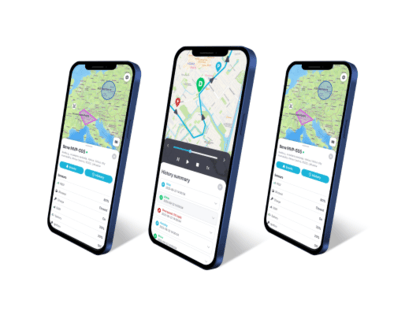
Yes. Most fleet tracking platforms support both powered telematics devices and battery trackers on the same dashboard. The powered devices provide full engine data and frequent position updates. The battery trackers provide position and motion data at a slower cadence. Both asset types appear on the same map and in the same reports, though the data depth for trailers is limited to what the battery tracker captures. The fleet should confirm that the battery tracker uses 4G LTE or LTE-M connectivity, as older 2G and 3G networks are being shut down globally. [4]
The Bottom Line
Battery powered trackers give fleets visibility over the assets that powered telematics devices cannot reach. Trailers, containers, generators, and equipment without an electrical system all become trackable with a device that carries its own power source, reports its position at a configurable interval, and fires a motion alert the moment something moves that should not be moving. The trade off is a slower reporting cadence and a narrower data set compared to a powered vehicle tracker, but for assets that would otherwise be completely invisible on the dashboard, a battery tracker on each one means the fleet actually has a position for those 60 trailers instead of calling drivers and customers to ask.
GPSWOX battery powered trackers support configurable reporting intervals, motion detection alerts, and geofence integration, providing position visibility for trailers and unpowered assets on the same platform as the fleet’s powered vehicle trackers.
Article Sources
- iot.guide. “IoT Device Power Consumption: Battery Management for GPS Trackers.” https://iot.guide/hardware/power-consumption-in-iot-devices
- GPS Tracker Reviews. “Best GPS Trackers for 2026 — Tested & Rated.” https://gpstrackerreviews.net/
- EBL Official. “Lithium-Ion Battery Safe Temperature Range: What You Need to Know.” https://www.eblofficial.com/blogs/battery-101/lithium-ion-battery-temperature-range
- TeleGeography. “2G and 3G: Closing Time for Legacy Networks.” https://resources.telegeography.com/2g-and-3g-shutdowns-continue