

 Back
Back












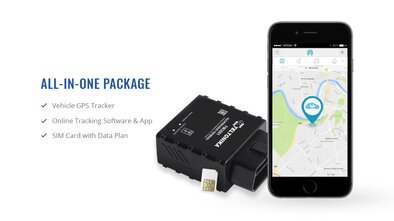





Hardwired vs OBD vs Battery GPS Trackers: Which Type Fits Which Vehicle
Jun 29, 2026Three tracker types account for almost every fleet vehicle and asset on the road. The right pick for any given case comes out of looking at the asset first, with marketing copy and spec sheets a long way behind in the decision.
Definition: GPS trackers come in three installation formats. The hardwired type wires into the vehicle’s electrical system and stays hidden behind a panel. The OBD plugs into the diagnostic port found in most modern light vehicles. The battery-powered type carries its own power source and goes on trailers, containers, and other assets that have no wiring to draw from.
Key Takeaways
- OBD trackers go in within seconds and pull engine data straight through the diagnostic port, with the trade-off that they remain visible from inside the cabin, and any driver can pull them out.
- Hardwired devices stay hidden once the install is finished, resist tampering, and work on any vehicle with a 12V or 24V supply, including those built before the OBD standard existed.
- Battery devices fill the gap for trailers, containers, and equipment without any onboard power, and the cost they carry is a reporting cadence that slows down dramatically to keep the cell alive.
- The OBD port itself is a hard compatibility limit. Vehicles built before about 1996 do not have one, and heavy trucks usually communicate through the J1939 protocol that many OBD trackers cannot read.
- Few mixed fleets end up running just one tracker type. Two or three device formats running side by side on a single platform is the standard pattern across operators with vans, trucks, and trailers under one roof.
A six-vehicle service operator and a thirty-trailer haulage carrier walk into the same showroom for GPS tracking. They should walk out with different hardware. The vans have OBD-II ports sitting right under the dashboard and a driver roster that rotates between cabs, both of which point at a plug-in OBD device that takes half a minute to fit. The trailers carry no power source and no diagnostic port either, which removes both of the powered options and leaves a battery-mounted device as the only category that makes sense. A business with both kinds of assets on its books ends up running both kinds of hardware. The mix is forced by the assets themselves, since picking a single device type would have meant leaving either the vans or the trailers unsupported.
This guide takes each tracker type apart on its own terms. Where it physically goes. How it draws power. Which vehicles and assets it actually fits. And the trade-offs that come baked into each format.
OBD-II tracker
Plugs into the on-board diagnostic port under the dashboard. Powered through the port. Engine data on tap from the moment it boots.
Install
About 30 seconds. No tools, no installer.
Best for
Modern light vehicles built post-1996 with rotating driver rosters and a need for engine data on every vehicle.
Trade-off
Visible from inside the cabin. Any driver with access can pull it out unless an OBD lock or port cover is fitted.
Compatibility limit
Pre-1996 vehicles have no port. Heavy trucks running J1939 return only partial data, or nothing at all.
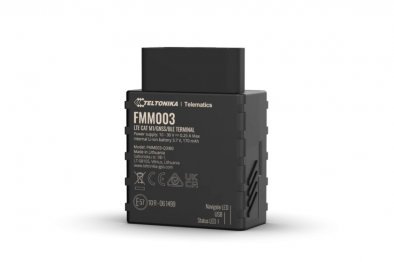
OBD-II trackers: plug in and go
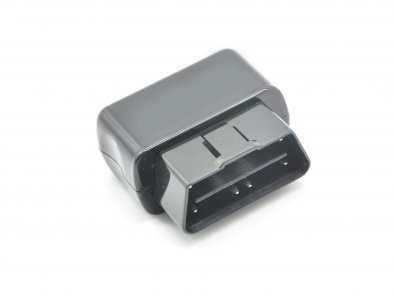
The OBD-II tracker connects to the on-board diagnostics port that has been a standard fitting on light vehicles since 1996 in the US and from 2001 in the EU. [1] The port itself usually lives under the steering wheel column, and it supplies the device with both power and a direct link to the vehicle’s engine data. Installation is genuinely fast. The job consists of locating the port, pressing the device in, and waiting for the ignition to come on so the tracker powers up by itself.
The upside list runs long. There is no toolbox involved and no installer required. Engine data is on tap from the moment the device boots, which means readouts for fuel level, battery voltage, engine RPM, diagnostic trouble codes, and odometer come up alongside location data on the dashboard. The device is also portable in the truest sense of the word. Once a vehicle leaves the fleet, the same tracker pulls out of the diagnostic port in seconds and slots into whatever vehicle replaces it, with the platform continuing to log against the new vehicle without any change to the subscription.
The downside list runs short, although the items on it are real. The tracker is visible from inside the cabin, which means anyone with access to the front seat can pull it out of the port. Fleets that worry about this fit a locking sleeve over the device or a tamper-resistant cover over the OBD port itself. There is also a hard line on compatibility that fleets sometimes hit by surprise. Anything built before the mid-nineties has no OBD-II port at all, and heavy trucks running J1939 over a CAN bus return only partial data to a standard OBD reader, or nothing at all in some cases. [2]
The vehicle profile that suits OBD is the modern light commercial vehicle. Vans, sedans, and small trucks built within the last twenty-five or so years, all sitting in fleets where the vehicle roster turns over regularly, where installation downtime needs to be minimal, and where engine data on every vehicle is part of the operational requirement.
Example: A car rental operator deploys OBD trackers across a three-hundred-vehicle fleet. The entire installation programme runs across a single afternoon. Every time a vehicle is rotated out of the fleet, the tracker comes out of the old port in seconds and goes into the next vehicle the same way, and the tracking platform sees no interruption in coverage.
Hardwired trackers: hidden and permanent
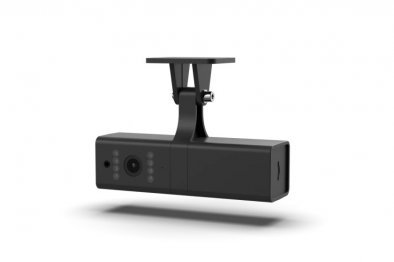
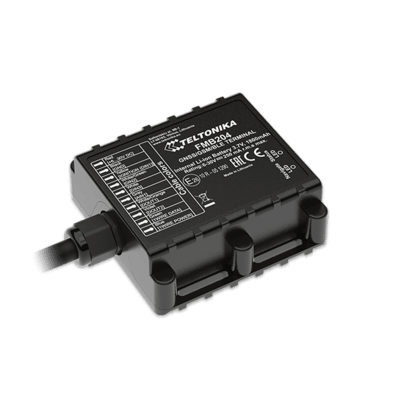
A hardwired tracker is connected directly into the vehicle’s electrical system. The standard install draws power from the ignition wire, which makes the device come on whenever the vehicle does, with ground taken from the chassis. A competent installer needs ten to thirty minutes per vehicle, and the device finishes the job sitting behind a dashboard panel or somewhere similarly out of sight from inside the cabin. [3]
The advantages are the inverse of the OBD format on almost every point. Nobody in the cabin can pull the device out of a port, because there is no port. Lifting the tracker for a weekend personal-use case would also mean undoing the wiring first, which discourages the casual removal that OBD trackers invite. The vehicle compatibility is essentially universal across anything running a 12V or 24V battery system, which covers motorcycles, passenger cars, vans, light trucks, heavy trucks, buses, construction plant, agricultural equipment, and marine vessels. Industrial-grade hardwired units typically tolerate a much wider voltage range than that, somewhere between 9V and 90V, and most of them are sealed to a respectable water and dust ingress rating that OBD devices rarely meet. [4]
Hardwired devices also accept extra input and output wiring that the OBD format cannot. Temperature probes for refrigerated transport, ignition kill relays for theft recovery, panic buttons, door open and close sensors, and dedicated fuel level sensors all wire into hardwired devices through extra leads. The OBD port on its own supports none of those connections.
What the format costs is the installation. A professional installer is part of most fleet rollouts, and the per-vehicle install fee turns into a one-time line item that the plug-in format avoids entirely. There is also a reverse cost at the end of the vehicle’s time in the fleet. Pulling the device back out at resale time takes installer hours again, although some operators avoid the bill by selling the vehicle with the tracker still in place and including it in the sale.
The vehicle profile that suits the hardwired format is anything an OBD device cannot reach properly, anything a fleet wants to hide for security or compliance reasons, anything that needs extra sensor inputs, and any operation where the deterrent value of a tracker that nobody can find adds up against the install cost.
Example: A regional haulage operator commits its forty-truck fleet to hardwired trackers. Two reasons drive the choice. The trucks all run on J1939 over CAN bus, which OBD readers handle poorly, and the operator wants the trackers concealed for stolen-vehicle response. A contracted installer takes a working week to complete the fleet, and the devices stay in the trucks for as long as the operator owns each vehicle.
Battery-powered trackers: when there is nothing to plug into
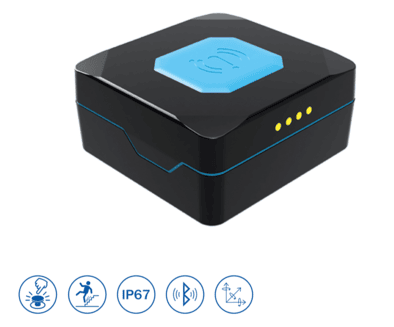
A battery-powered tracker carries its own internal cell, with no vehicle wiring required at all. The mounting hardware is either a magnetic base, a sheet of industrial adhesive, or a small set of screws, depending on the surface. The category exists for one reason. Trailers, shipping containers, intermodal freight equipment, generators, construction tools, plant equipment, and vehicles in long-term storage have no live power source to draw from, which closes off both of the wired options at once. [5]
The defining trade in this category is power against reporting frequency. A device sending position once an hour from a sleeping trailer can hold its battery alive for a year or more. The same device set to send position every fifteen seconds drains itself in days. The default operating mode on most products in this category is wake-on-motion. The device sleeps deeply while the asset is stationary, comes awake the moment the accelerometer reads movement, reports actively for the duration of the move, and falls back asleep when the asset stops again. The configuration extends battery life by months or years against the alternative of constant reporting, and the movement events themselves still come through to the platform.
The frequency trade is the price the category charges across the board. A battery tracker reporting on a battery-friendly cadence cannot serve live dispatch on a working van, since the position updates do not arrive often enough to support real-time operations. The category sits where the alternative is no tracking at all, on assets that have no power source for either of the wired options to work with.
A couple of practical details split the category internally. Magnetic bases attach to any steel surface in seconds and come off the same way, which suits operations where the device may need to move between trailers or containers as the fleet rotates. Adhesive or screw-mounted devices commit to a single asset for the device’s lifetime, since removal involves either a scraper or a screwdriver. Covert theft-prevention mounts almost always use the harder-to-remove fastening, since a magnet that comes off in seconds also comes off for a thief.
Example: A trailer rental operator installs magnetic battery trackers across a sixty-trailer fleet. The configuration reports position every two hours when the trailer is stationary and switches to two-minute updates the moment the device picks up movement. Each battery runs for roughly two years under that profile before a swap is needed.
Side-by-side comparison
| Feature | OBD-II | Hardwired | Battery |
|---|---|---|---|
| Install time | 30 seconds | 10 to 30 minutes | A few minutes |
| Installer needed | No | Often yes | No |
| Power source | OBD port | Vehicle wiring (12V or 24V) | Internal battery |
| Visibility | In plain sight | Hidden | Mounted, hideable on assets |
| Tamper resistance | Low | High | Depends on mounting |
| Compatible vehicles | Light vehicles post-1996 with OBD-II | Anything with 12V or 24V power | Anything (powered or not) |
| Heavy trucks (J1939) | Partial or unsupported | Fully supported with right device | Not applicable |
| Engine data | Yes, via OBD port | Yes, via OBD or CAN connection | None (no vehicle to read) |
| Reporting frequency | Continuous while engine is on | Continuous while ignition is on | Configurable, trades against battery |
| Portability between vehicles | Excellent | Poor without reinstallation | Excellent |
| Typical use case | Modern vans, cars, light trucks | Mixed fleets, heavy trucks, older vehicles, security | Trailers, containers, unpowered assets |
OBD-II tracker
The OBD-II port is sitting right there under the dashboard. Half-minute install, no toolbox, engine data on tap. If concealment matters operationally, swap to hardwired; otherwise OBD is the default.
A reading of the table maps cleanly onto a decision. Modern light vehicles with no theft or tamper concern, where engine data needs to be on the dashboard for every vehicle, fall into the OBD column. Heavy trucks, older vehicles, security-sensitive deployments, and anything needing extra sensor wiring fall into the hardwired column. Assets carrying no power source of their own fall into the battery column, since neither of the other two has any way to function without electricity.
How to decide on a given vehicle or asset
Five questions resolve almost every case.
Does the vehicle have an OBD-II port? When the answer is no, because the vehicle predates 1996, or it is a motorcycle, or it is a heavy truck on J1939, or it is agricultural equipment, the OBD option is off the table. When the answer is yes, the OBD option stays in play, and the rest of the questions decide whether it wins.
Is concealment a requirement? The relevant cases include theft response, driver tamper risk, or an operational preference for keeping the device out of the cabin altogether. The hardwired format takes the role when concealment is on the requirements list. The OBD format stays viable if visibility on the device does not cause an operational problem.
Is engine data needed? A yes here forces the choice into the OBD or hardwired column and removes the battery option. A no opens up the battery option for any kind of asset, although the powered formats remain on the table too.
Does the device need to follow the driver, the vehicle, or neither? Rental operations, leased fleets, and operators that turn over their vehicle stock often benefit from the OBD format’s quick removal and reinstallation between vehicles. Fleets that keep their vehicles for years at a time get less out of that portability.
Does the asset have onboard power at all? Trailers, containers, equipment left at remote sites, parked vehicles, and stored stock all answer this question with a no. The battery format is the only category that can operate on an asset without its own electricity supply.
The list runs through quickly. A small operator with five light vans and no theft worries works through the five questions and ends up at OBD. A larger operator with heavy trucks and trailers works through the same list and ends up with hardwired devices on the trucks and battery devices on the trailers, two distinct categories running side by side under one platform.
Example: A construction firm operates six pickup trucks, two flatbed trucks, four trailers, and a portable generator that gets left overnight at active job sites. The pickups go on OBD trackers, since they have the diagnostic ports, and the firm wants engine data on its working vehicles. The flatbed trucks get hardwired devices because their drivetrains report through J1939, and the OBD format cannot read the data properly. The trailers and the generator go on battery devices, since none of them has any onboard power to draw from.
GPSWOX runs GPS hardware and fleet management software covering all three formats, and a mixed fleet can manage every category through a single platform, regardless of how the hardware breaks down across the asset list.
5 tracker-choice mistakes
1. Picking OBD for a heavy truck
The truck transmits its diagnostic data over J1939 on the CAN bus, and a generic OBD-II reader sitting on the diagnostic port comes back with a partial dataset at best, or nothing at all in many cases. The correct purchase here is a hardwired unit with proper J1939 decoding built into the firmware. Going with the cheapest catalogue option labelled OBD does not save money once the missing data becomes an operational problem.
2. Picking OBD when concealment matters
An OBD device sitting visibly under the dashboard gets found by any driver who decides to look for it. The first time someone unplugs it, the tamper alert fires on the platform, dispatch follows up by phone, the driver insists the disconnection was accidental, and the same sequence happens again the following week. Fleets where this dynamic shows up should have started on hardwired devices, which take the device out of reach from inside the cabin.
3. Picking a battery for an active fleet vehicle
A battery device set to report on an interval that keeps the cell alive cannot drive live dispatch on a vehicle that is on the road eight hours a day. The category is the answer when the only alternative is nothing at all, for assets that genuinely have no power source. Working vehicles are not assets in that sense, and the wired formats are the appropriate choice for them.
4. Buying one device type for everything
Fleets with mixed assets cannot run a single tracker format without leaving some part of the fleet poorly served. A standardised OBD rollout leaves the trailers untracked. A standardised hardwired rollout still leaves the trailers untracked. A standardised battery rollout sacrifices the live dispatch capability on the powered vehicles. The fleets running cleanest end up with two or three categories of hardware deployed in parallel, under a single platform that brings the data together regardless of where it came from.
5. Ignoring the install-removal symmetry
A hardwired tracker has to come out of the vehicle at the end of life, and the removal eats installer time the same way the original install did. Some operators avoid the cost by selling the vehicle with the device still wired in, passing the question of ownership over to the new buyer. Either approach is defensible. The mistake is not deciding which approach the fleet is taking, which leads to a backlog of trackers sitting in vehicles the fleet no longer owns or even tracks.
Frequently asked questions
Are OBD trackers easy to remove?
Yes. A driver, a passenger, or anyone else with access to the cabin can unplug an OBD device in seconds. The platform can fire a tamper alert as soon as the device drops offline, and the alert tells the dispatcher what happened, although the device itself remains in plain sight unless an OBD lock or a port cover has been fitted over it. [3]
Can a battery GPS tracker work on a regular vehicle?
It can be made to work, although the reporting interval that keeps the battery alive is much longer than the cadence working vehicles need for active operations. The category exists for trailers, containers, parked equipment, and other assets that do not have onboard power to support the wired formats. [5]
Do all cars have an OBD-II port?
Most light vehicles built from the mid-1990s onward, with the exact year depending on the market, carry an OBD-II port under the dashboard close to the steering wheel column. [1] Vehicles older than that, along with many heavy commercial vehicles, have no OBD-II fitting and need hardwired devices to take their place. [2]
How long does a GPS tracker battery last?
The honest answer is that it depends on the reporting profile more than on the device. A unit set to report every fifteen seconds drains itself within days of installation. The same unit set to sleep when the asset is stationary, wake on motion, report every five minutes during movement, and sleep again at the next stop typically runs between one and three years on the same battery. [5]
Can I install a hardwired GPS tracker myself?
A vehicle owner with some electrical experience can usually complete a hardwired installation in ten to thirty minutes, given the correct device and a reasonable wiring diagram. Most fleet operators still hand the work to a professional installer. The reasons are warranty protection and the risk of damaging other vehicle electronics by routing the device wiring incorrectly through the cabin. [3]
The Bottom Line
Hardware choice is one of the few areas in fleet tracking where the asset itself sets the answer. The physical realities of the vehicle take precedence over any preference the operator might bring to the decision. The asset draws the lines around what is possible. A vehicle with no OBD-II port forces the choice into the hardwired or battery formats from the start. A vehicle where concealment matters operationally takes OBD off the table even when the port exists. An asset with no onboard power source removes both wired formats and leaves the battery as the only option. Working through those three checks in order resolves the device decision for almost any vehicle or asset that comes into the fleet.
The cleanest fleets run more than one tracker format. The ones that fight their hardware in the field tend to be the operators who committed to a single category early on and then ran into the gaps in coverage as the vehicle and asset mix evolved.
Article Sources
- U.S. Government Publishing Office (Federal Register). “Final Rule on On-Board Diagnostics for Light-Duty Vehicles and Trucks.” https://www.govinfo.gov/content/pkg/FR-1996-08-30/html/96-21946.htm
- Federal Motor Carrier Safety Administration. “ELD Technical Specifications.” https://www.fmcsa.dot.gov/hours-service/elds/eld-technical-specifications
- U.S. Department of Energy. “Telematics for Federal Fleets: A Guide for Efficient Fleet Management.” https://www.energy.gov/cmei/femp/telematics-federal-fleets-guide-efficient-fleet-management
- Bureau of Indian Standards (IS/IEC 60529:2001). “Degrees of Protection Provided by Enclosures (IP Code).” https://law.resource.org/pub/in/bis/S05/is.iec.60529.2001.pdf
- MDPI (IoT journal). “Experimental Evaluation of NB-IoT Power Consumption and Energy Source Feasibility for Long-Term IoT Deployments.” https://www.mdpi.com/2624-831X/7/1/7