

 Back
Back
















GPS Tracking vs Telematics: What the Difference Actually Means for Your Fleet
Jun 22, 2026GPS tracking and telematics are sold side by side and treated as if they were the same product. The data each one captures is different, and the price gap between the two systems reflects that difference.
Definition: GPS tracking is a satellite location feed for a vehicle. Telematics is the same satellite feed combined with a second data stream coming out of the vehicle through the vehicle’s diagnostic port.
Key Takeaways
- A telematics setup always has GPS in it. The reverse is not true. A GPS only tracker has no telematics in it, and there are plenty of those on the market.
- GPS only tracking reports the vehicle’s location, speed, route, and arrival times. Telematics reports all of that, plus a second feed coming from the vehicle, with data like engine RPM, fuel level, ignition state, and any diagnostic trouble codes the vehicle is throwing.
- GPS tracking on its own handles fleets whose operational pain is location and accountability, and the lower subscription tier on most platforms covers that work. Fleets dealing with fuel, idling, or maintenance problems are in a different camp. The data behind those problems is engine data, and GPS has no access to engine data.
- Power source and data depth are independent device specs. A hardwired tracker can be GPS only or full telematics, and the same goes for OBD-plug devices. The subscription tier sets the data depth, not the form factor of the hardware.
- Hardware costs are about the same for either system. The subscription is where the price difference lands. A full telematics plan usually runs two to four times what a GPS only plan does per vehicle per month.
Most fleets pick between the two by looking at the monthly price. The cheaper subscription wins. The data capability gap between them goes unexamined. The cost of that shortcut shows up in the second half of the year, after the fleet has already paid for six months of the wrong subscription. Either the team is investigating a fuel problem that GPS cannot help with, or they are paying for telematics features that nobody has logged in to use.
The technical difference between the two systems is one paragraph long. Working out which one a given fleet needs takes longer than reading the definition, and so does working out what the extra subscription cost on the telematics tier actually pays for. This guide covers both.
GPS Tracking
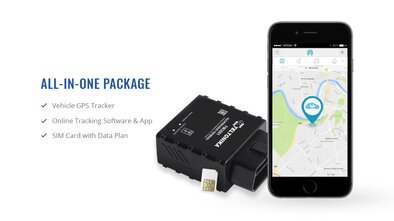
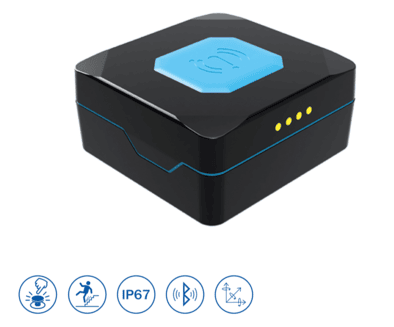
A satellite location feed for the vehicle. Position, speed, route, and arrival times come straight off the GPS chip and the cellular modem on the device.
What it reads
Latitude, longitude, speed, heading, and a timestamp. Some devices add an accelerometer event stream on top.
Best fit
Fleets whose operational pain is location and accountability. Route adherence, ETAs, dispatch coordination, stolen vehicle response.
What it does not read
Engine RPM, fuel level, coolant temperature, ignition state, diagnostic trouble codes, odometer.
Cost
Lower subscription tier on most platforms. Roughly one quarter to one half of the telematics rate per vehicle, per month.
The technical line between them
GPS tracking works by satellite. A receiver inside the vehicle picks up signals from at least four GPS satellites. It calculates its position by trilateration. That position then gets transmitted over the cellular network back to a fleet management platform. [1] Update frequency depends on the device and the subscription tier. Most setups update once every five to sixty seconds, depending on how the device is configured.
A GPS only system stops at this point. The device sends back a continuous stream of position points. Each point has coordinates on it, a speed, a heading, and the time it was recorded. From those points, the platform builds the trip history, the live map, the geofence alerts, the speeding flags, and the arrival and departure logs, and there is no other data source feeding any of that.
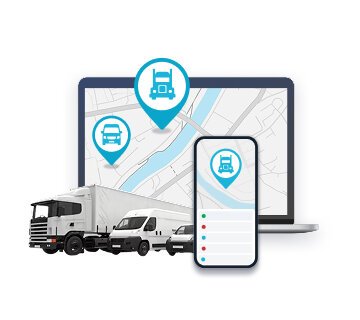
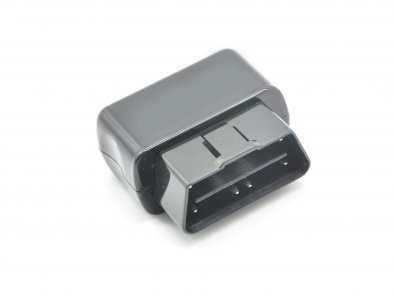
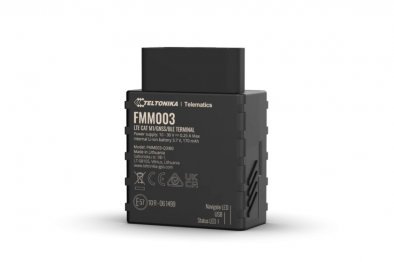
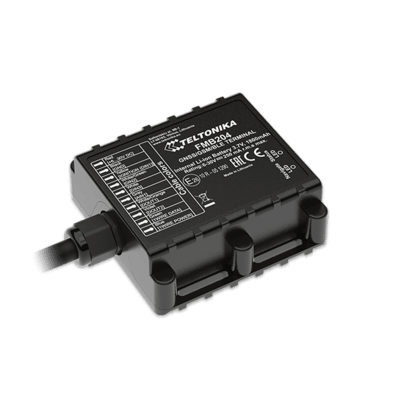
Telematics covers the same ground and adds a second feed. The telematics device plugs into the OBD-II port. On heavier trucks, it wires into the CAN bus instead. From there, it reads vehicle data directly off the vehicle. From the port, the device pulls engine RPM, coolant temperature, fuel level, odometer mileage, and the ignition state, and any diagnostic trouble codes the vehicle is reporting come with it. An accelerometer inside the device picks up harsh acceleration, harsh braking, and impacts above a set threshold. A single vehicle running through a working day generates thousands of data points, and most of those come from the vehicle side of the device, not from the GPS chip.
The practical line between the two is the diagnostic port connection. If the device plugs into the OBD or CAN bus and reads vehicle data, it is a telematics device. If it only reports position, it is a GPS only tracker. Box copy and dashboard design are not what decide the category. The diagnostic port connection is.
What each system actually delivers
Below is the capability split, side by side.
| Capability | GPS tracking only | Telematics |
|---|---|---|
| Real time vehicle location | Yes | Yes |
| Trip history and route playback | Yes | Yes |
| Geofence alerts | Yes | Yes |
| Speeding alerts | Yes | Yes |
| Driver identification (key fob, login) | Sometimes | Yes |
| Engine diagnostics (DTCs, fault codes) | No | Yes |
| Fuel level and fuel consumption | No | Yes |
| Harsh braking, acceleration, cornering | Sometimes | Yes |
| Idle time with engine state | Partial | Yes |
| Predictive maintenance scheduling | No | Yes |
| Driver scorecards | No | Yes |
| Compliance reporting (HOS, tachograph data) | No | Yes |
| Customer ETAs from live data | Yes | Yes |
The middle rows of that list are where most fleet purchase decisions actually turn. A GPS only tracker can show that a van has been sitting at a job site for forty minutes. It cannot show whether the engine was on or off for any of those forty minutes. A telematics device reads the ignition state and reports it. That single data point is the foundation behind every fuel cost report, every idling report, and every driver scorecard a platform produces. [2]
GPS Tracking
Route adherence and missed appointments are location problems. The GPS feed shows where vehicles went and when they got there. The lower subscription tier covers all of it without needing engine data.
Which one does a given fleet actually need
The right choice follows from what the fleet is actually trying to fix.
GPS tracking on its own is enough for problems centred on location and accountability. Drivers going off route. Missed appointments. Dispatch coordination. The occasional stolen vehicle. Customers are calling in for an ETA. The lower subscription tier covers all of these on its own, and the engine data on a higher tier would not be used.
Telematics is the answer when the operational problem is cost. Fuel spend is climbing faster than mileage. Drivers idling beyond policy. Harsh driving habits are driving the insurance premiums up. Maintenance is still scheduled off a paper calendar. Fuel is disappearing from yard vehicles overnight. None of those numbers can be moved with GPS alone, because the data behind each of them is engine data and driver behaviour data. GPS has no access to either.
Then there is compliance, which is mostly a telematics requirement by default. Hours of service logs. Tachograph downloads. Electronic inspection records. Mileage reporting for fuel tax. None of that data is location data. A GPS only tracker does not produce any of it.
Example: A six vehicle landscaping fleet wants to verify drive times reported on timesheets. The data needed is a per shift location record per vehicle, and GPS only at the lower subscription tier produces that data without engine readings.
Example: A thirty van regional courier is watching fuel costs climb month after month, even though mileage has been steady. Looking at the GPS feed will not solve the problem, since the relevant numbers, fuel consumption, idling minutes, and driver behaviour, are not in the GPS feed to begin with. They are in the telematics feed. A telematics subscription on the thirty vans typically pays back the extra monthly cost once the idling and the harsh driving habits start being corrected.
Example: A regional contractor runs fifteen vehicles, split between eight commercial work vans and seven sales cars. The work vans are where idling and fuel consumption are operational concerns, so they sit on the telematics tier of the subscription. The sales cars are the opposite case. The only data that matters for them is when the rep arrived on site and how long the meeting ran, and GPS handles that without needing engine data. The whole fleet runs on one integrated platform with two tiers configured side by side.
The cost difference
Hardware costs come out about the same either way. A GPS only tracker and an OBD-II telematics device cost about the same to manufacture. The bulk of the cost in both is the cellular modem and the GPS chip, and both devices have one of each.
The price separates at the subscription. A GPS only subscription sits at the lower end of the per vehicle per month range. The full telematics subscription comes in two to four times more expensive per vehicle. Engine data, driver scorecards, fuel reporting, and maintenance scheduling are the features driving the difference. Pricing varies regionally, and so do plan terms and contract length, but the two to four multiplier applies fairly consistently across the major platforms in the market.
Installation costs come out similar too. OBD port devices are driver installable, with no install fee. Hardwired devices add a one time per vehicle install fee. The fee is the same for GPS only and telematics hardwired devices, because the wiring work is identical regardless of what the device on the other end is reading.
On the GPSWOX side, the fleet management software runs in either mode, and the subscription tier the fleet ends up on is matched to the data depth being used rather than a single fixed monthly price across the board.
5 mistakes fleets make on this decision
1. Paying for telematics, using only the map
A telematics subscription with engine data, scorecards, and fuel reports gets signed up at purchase. Six months in, the only feature being actively used is the live map, and only by one person on the dispatch side. The remaining features go untouched. The fleet is paying telematics rates and using GPS only capabilities.
2. Buying a GPS only and then needing telematics for compliance
Compliance requirements arrive after the GPS only system is already installed across the fleet. The existing tracker cannot produce the vehicle data that the regulator is asking for. The hardware gets pulled out and replaced inside a year, at a cost the fleet has already paid once. One compliance question during the buying process would have caught it before any of the hardware went in.
3. Confusing real time location with real time engine data
A live map refreshing every fifteen seconds is real time location data. The map says nothing about the state of the engine, the level in the fuel tank, or the temperature the coolant is sitting at. Both location data and vehicle data are sold as real time data. Only one of them is being read from inside the vehicle.
4. Assuming hardwired equals telematics
Hardwired describes how the device draws its power, not what data it reads. Hardwired GPS only trackers exist on the market. OBD plug telematics devices also exist, and they run on power drawn from the diagnostic port. Where the device gets its power from and what data depth it reads are independent specifications, and the combinations are all real products on the market.
5. Treating the OBD port as a complete data source
OBD-II reads most of what light vehicles produce. Heavy trucks operate on a different diagnostic protocol than light vehicles. The J1939 standard is what heavy trucks transmit over the CAN bus, and an OBD-II reader designed for light vehicles has no way to parse J1939 messages. On a heavy duty fleet, the telematics device has to support J1939. If it does not, the data coming back from the trucks will be a fraction of what the vehicles actually produce.
Frequently asked questions
Is GPS tracking the same as telematics?
No. GPS tracking is one component sitting inside a telematics system. The telematics system uses GPS for the location side and pulls a second feed of vehicle data through the diagnostic port. [3] Treating the two as the same thing is the most common reason fleets end up paying for the wrong subscription tier.
Can a GPS tracker show fuel consumption?
A pure GPS tracker cannot. It has no wire into the fuel system and no data input from the vehicle. A telematics device on the OBD or CAN bus can pull fuel level and work out consumption per trip and per vehicle from there. [2] Fuel reporting needs vehicle data access, not GPS on its own.
Do small fleets need telematics, or is GPS tracking enough?
It comes down to the cost driver, not the fleet size. A small fleet dealing with location and accountability problems can run on GPS tracking alone. The same small fleet, if its costs are running up because of fuel or maintenance, or insurance, is in the same position as a fleet five times the size. The numbers that need to move are coming out of the engine and the driver behaviour, not from satellite coordinates.
Will GPS tracking work without cellular service?
Active GPS trackers transmit their data over the cellular network, and when the cellular signal drops, the platform stops getting updates. The position data does not disappear during the outage. Most devices store it locally on the device itself and upload the backed up points the moment the signal comes back. The trip history fills in retroactively after the outage clears, but the live map shows a gap during the period itself. [4] On routes that genuinely lose cellular for long stretches at a time, some manufacturers offer a satellite backhaul option on the device at a higher monthly cost.
Is a dashcam considered telematics?
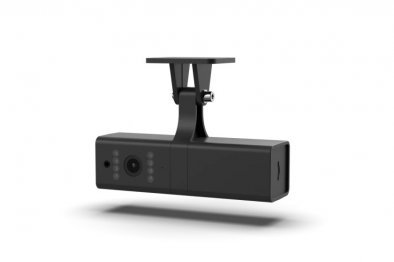
If it is the modern AI kind that captures forward facing video, driver facing video, and harsh event clips, and tags everything to GPS coordinates, it is usually sold as part of a telematics platform. A standalone dashcam that just records video to an SD card is not telematics. There is no analytics platform on the other end of it, and no driver scorecard being built from the footage.
The Bottom Line
The two terms describe two different things that happen to share most of their hardware. GPS tracking is a location system, narrow and well defined. Telematics is an operational data system, and location is one of the inputs going into it. The fleet decision is not really between two products at different prices. It is between solving a location problem and solving an operations problem, and the data each system produces is what determines which of the two problems you can do anything about.
For fleets that would rather not be running two different platforms in parallel, GPSWOX runs fleet management software supporting both modes from one account. The tier the fleet ends up on follows from the data depth being used, not from a single fixed price across the board.
Article Sources
- Federal Aviation Administration. “Satellite Navigation - GPS - How It Works.” https://www.faa.gov/about/office_org/headquarters_offices/ato/service_units/techops/navservices/gnss/gps/howitworks
- U.S. Department of Energy. “Telematics for Federal Fleets: A Guide for Efficient Fleet Management.” https://www.energy.gov/cmei/femp/telematics-federal-fleets-guide-efficient-fleet-management
- Federal Motor Carrier Safety Administration. “ELD Technical Specifications.” https://www.fmcsa.dot.gov/hours-service/elds/eld-technical-specifications
- Federal Communications Commission. “Plan Ahead for Phase Out of 3G Cellular Networks and Service.” https://www.fcc.gov/consumers/guides/plan-ahead-phase-out-3g-cellular-networks-and-service